Corporate Air Ticket Booking: How Companies Manage Fare Rules, Date Changes and Cancellations on Employee Tickets
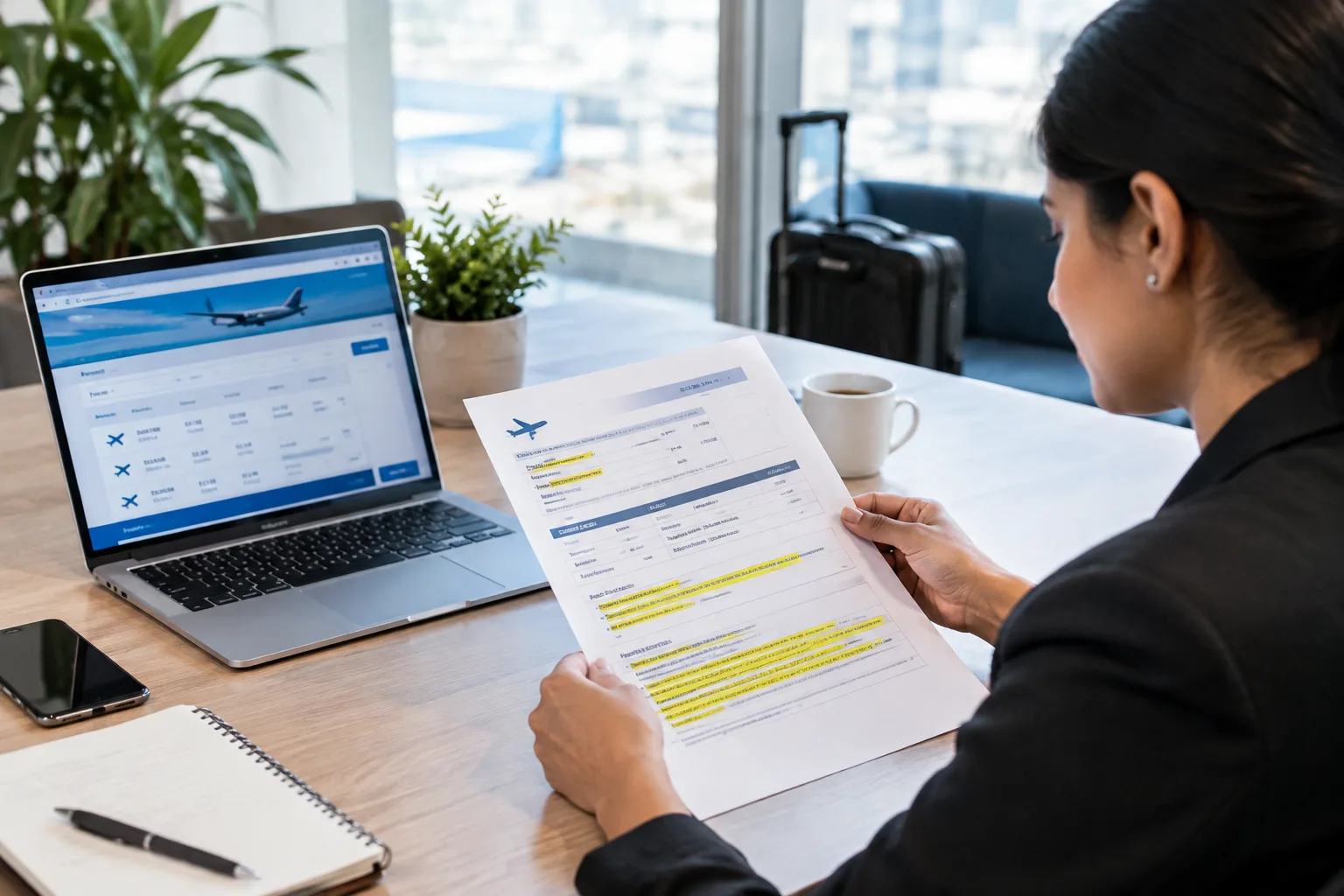
Corporate air ticket booking is the way a company buys, tracks and adjusts flights for its employees under one set of rules, instead of leaving each traveller to book alone. The biggest savings and losses come from the fare rules attached to each ticket: what a date change costs, whether a cancellation earns a refund or a credit, and what happens on a no-show. Companies that manage this well choose the right fare type at booking, route every change through one desk, and track unused ticket value until it is used or refunded.
Below, we explain how each of those pieces works, what Indian refund rules say, and how a dedicated booking partner keeps your team moving when plans change.
What a Corporate Air Ticket Booking Service Covers
A company flight booking service does far more than issue tickets. It compares fares across airlines, applies your travel policy, collects approvals, issues the ticket, and then manages everything that happens afterwards: reissues, cancellations, refunds, credits and reporting for your finance team.
At Valiant Business Solutions (VBS), our corporate flight booking service assigns a dedicated travel specialist to each company. That person knows your policy, your frequent routes and your approvers, so every corporate air ticket is booked with the same logic, whether it is a single day trip from Pune to Delhi or a multi-city international itinerary.
Fare Rules: The Fine Print on Every Corporate Air Ticket
Every airfare is sold with a set of conditions. Across the airline industry, these conditions are filed in a structured format maintained by ATPCO (Airline Tariff Publishing Company), where Category 16 covers penalties, Category 31 covers voluntary changes and Category 33 covers voluntary refunds. Your travellers never need to read these codes, but your booking partner should, because they decide how much a changed plan will cost.
Fare families and what they mean for business travellers
Most airlines flying in India sell fares in families, with names such as saver, standard, flexi or corporate fares. The names and inclusions differ from airline to airline. As a general pattern, the lowest fares carry the highest change and cancellation charges, while flexible fares cost more upfront but allow changes at a lower charge or none at all. The cheapest corporate air tickets are not always the most cost-effective once a meeting moves.
Questions to ask before a ticket is issued
- What is the change fee, and will the traveller also pay any fare difference?
- If the trip is cancelled, is the result a refund, a credit shell, or only a tax refund?
- Can the ticket be transferred to another employee? (On most airlines, name changes are not permitted.)
- What happens on a no-show, and does it affect the return or onward flight?
- How long does any unused value stay valid?
How Companies Manage Date Changes on Employee Tickets

Date changes are the most common amendment on business tickets. A client reschedules, a project overruns, or a site visit is pulled forward. The cost of a change is usually made up of the airline change fee set by the fare rules, plus any fare difference on the new flight. Well-run companies keep these costs predictable with a few simple habits:
- Match the fare type to trip certainty. Confirmed conference travel can go on a lower fare, while sales trips that often shift are better on a flexible fare.
- Route every change through one desk. When employees change tickets individually, charges and credits get lost. One point of contact keeps a clean record.
- Set an approval threshold. Small changes can be approved by the traveller's manager; larger fare differences go to the travel or admin manager.
- Compare reissue against cancel-and-rebook. Sometimes cancelling and booking a fresh fare costs less than a reissue. A specialist checks both before acting.
When plans change late at night or at the airport, timing matters. VBS offers 24x7 traveller support, so an employee whose meeting moves or whose flight is disrupted can reach someone who can rebook immediately rather than waiting for office hours.
Cancellations, No-Shows and Refunds: What Indian Rules Say
For business travel flight booking in India, refunds are governed by the Directorate General of Civil Aviation (DGCA) through its Civil Aviation Requirements (CAR) on refund of airline tickets. One provision matters most on low fares: even when a ticket is non-refundable, statutory taxes and airport charges such as the User Development Fee (UDF), Airport Development Fee (ADF) and Passenger Service Fee (PSF) are to be refunded. The DGCA rules also place responsibility for refunds on the airline when a ticket is bought through its authorised agent. Because the CAR is revised from time to time, your booking partner should check the current version when a refund is in question.
These tax refunds are easy to leave unclaimed when cancellations are handled informally, which is one reason a central booking desk helps your cost control.
Two other situations need different handling:
- Airline-initiated cancellations or major schedule changes. These are treated differently from a voluntary cancellation, and the traveller is generally offered an alternative flight or a refund.
- No-shows. On many fares, missing a flight without cancelling forfeits the base fare and can cancel the remaining segments of the booking. Informing the airline or your agent before departure protects more of the ticket's value.
Bulk Flight Booking for Employees and Group Travel

Offsites, conferences, dealer meets and plant visits often mean booking ten or more seats on the same flight. Group fares follow their own rules, which usually include deadlines for submitting traveller names and conditions on partial cancellation. Planning bulk flight booking for employees early gives you more choice of flights and more room to adjust the headcount. Our flight booking page answers whether you can get discounts on group or corporate flight bookings.
Corporate Air Ticket Booking Agents vs Booking Direct
Booking directly with airlines works for occasional trips. As travel volume grows, problems appear: tickets spread across personal emails, credits that expire unused, no single report of what was spent, and no one to call at midnight. Corporate air ticket booking agents solve this by holding all bookings, fare rules and credits in one place and acting on your behalf when plans change.
If you are comparing providers, our guide on choosing a corporate travel management company in India lists the questions worth asking, from support hours to how expenses are reported back to finance.
Air Ticket Booking Near Me: Why a Local Partner Still Helps
People searching for "air ticket booking near me", "air tours and travels" or "air travels" usually want a real person who can sort out a booking, not another app. For companies in Pune, Mumbai and Chennai, a local partner means faster answers, a team that understands your routes from Pune Airport or Chhatrapati Shivaji Maharaj International Airport, and someone who can meet your admin team when needed. Read more about flight booking in Pune for business and leisure travel, including how we also plan personal and family trips for employees.
How VBS Manages Fare Rules, Changes and Cancellations for Your Team
Business flight booking for companies works best when it is part of wider corporate travel management, so flights, hotels, visas and ground transport stay in step when a date moves. Here is how we handle it:
- Fare rules checked before ticketing, so travellers and approvers know the change and cancellation position upfront.
- A dedicated specialist who manages reissues, refunds and credits for your company.
- 24x7 support for travellers facing delays, cancellations or last-minute changes.
- Linked services, so a changed flight also triggers updates to hotel stays, airport transfers and visa timelines.
- Clear status updates. Our clients in Pune, Mumbai and Chennai have named team members such as Ashish and Devayani for keeping them informed at every step.
If your team is losing money to unused tickets or unclear fare rules, speak to our corporate travel team and we will review how your current bookings are handled.
Frequently asked questions
Can a corporate air ticket be transferred to another employee?
On most airlines, name changes on a ticket are not permitted, so a ticket cannot simply be passed to a colleague. The usual route is to cancel or hold the unused value under the original traveller's name and book a fresh ticket. Your booking partner can check the fare rules to see what value can be recovered.
Do we get anything back on a non-refundable ticket?
Yes, in most cases. Under DGCA's Civil Aviation Requirements on refund of airline tickets, statutory taxes and airport charges such as UDF, ADF and PSF are to be refunded even on non-refundable fares. A central booking desk makes sure these amounts are actually claimed.
What does a date change on a business ticket usually cost?
The cost is normally the airline's change fee under the fare rules plus any difference between the old and new fare. Flexible fares carry lower or no change fees, while the lowest fares carry the highest. We confirm the exact amount before reissuing so your approver can decide.
Can VBS help if an employee's flight is cancelled late at night?
Yes. VBS provides 24x7 traveller support, so an employee can reach our team at any hour to rebook, arrange a hotel or adjust airport transfers. This keeps the traveller moving and keeps the change on record for your company.
Do you handle corporate flight booking for startups and small teams?
Yes. We work with startups, SMEs and large enterprises alike. Smaller teams benefit from the same fare rule checks, change management and reporting, without needing an in-house travel desk.
