Business Visa Documents for Employees: Invitation Letters, Cover Letters and Sponsorship Proof
Business visa documents for employees fall into three groups. The first is the employee's personal papers: passport, photographs, application form and financial records. The second is an invitation letter from the host organisation abroad, and the third is a cover letter from the Indian employer confirming the purpose of the trip and who is paying for it. Most delays and refusals come from gaps or mismatches between these three sets, so when they tell one consistent story, the application is far stronger.
Below is the checklist our visa team at Valiant Business Solutions (VBS) works through for corporate travellers, with notes on what each letter should actually say. Exact requirements differ by country and change from time to time, so always confirm against the embassy or consulate's current list before you submit.
The core business visa documents for employees

Personal documents from the employee
- Valid passport with enough remaining validity and blank pages. The Schengen Visa Code (Regulation (EC) No 810/2009), for example, requires a passport issued within the previous ten years, valid for at least three months after the planned departure from the Schengen area, with at least two blank pages.
- Completed application form, signed, with every name and number entered exactly as it appears in the passport.
- Recent photographs to the destination's own specification, since size, background and acceptable age of the photo vary by country.
- Old passports and previous visas, which help demonstrate a clean travel history.
- Personal financial proof, usually recent bank statements and income tax returns, even when the company is covering the trip.
- Itinerary: a flight reservation and hotel booking that match the travel dates in every letter.
Documents from the company
- A cover letter on company letterhead (covered in detail below)
- Proof of employment, such as an employee ID, recent salary slips or an employment certificate
- Company registration proof, where the consulate asks for it
- An invitation letter from the host company abroad
- Sponsorship proof showing who pays for travel, stay and insurance
The invitation letter: what the host company should include
The invitation letter comes from the organisation your employee is visiting: a client, supplier, parent company or conference organiser. Consular officers use it to confirm that a genuine business relationship exists. A strong invitation letter includes:
- The host company's full name, address, registration details and contact person
- The employee's full name, designation and passport number, matching the passport exactly
- The specific purpose of the visit, for example contract negotiations, a plant audit or a product training session
- Exact dates of the visit and the city or cities involved
- A statement of which costs, if any, the host will cover
- A signature from an authorised person, with name, title, phone and email
Ask the host to send a signed copy on letterhead, ideally as a clear PDF with contact details a consulate could verify. For conferences, an official registration confirmation from the organiser often does the same job.
The company cover letter from the Indian employer
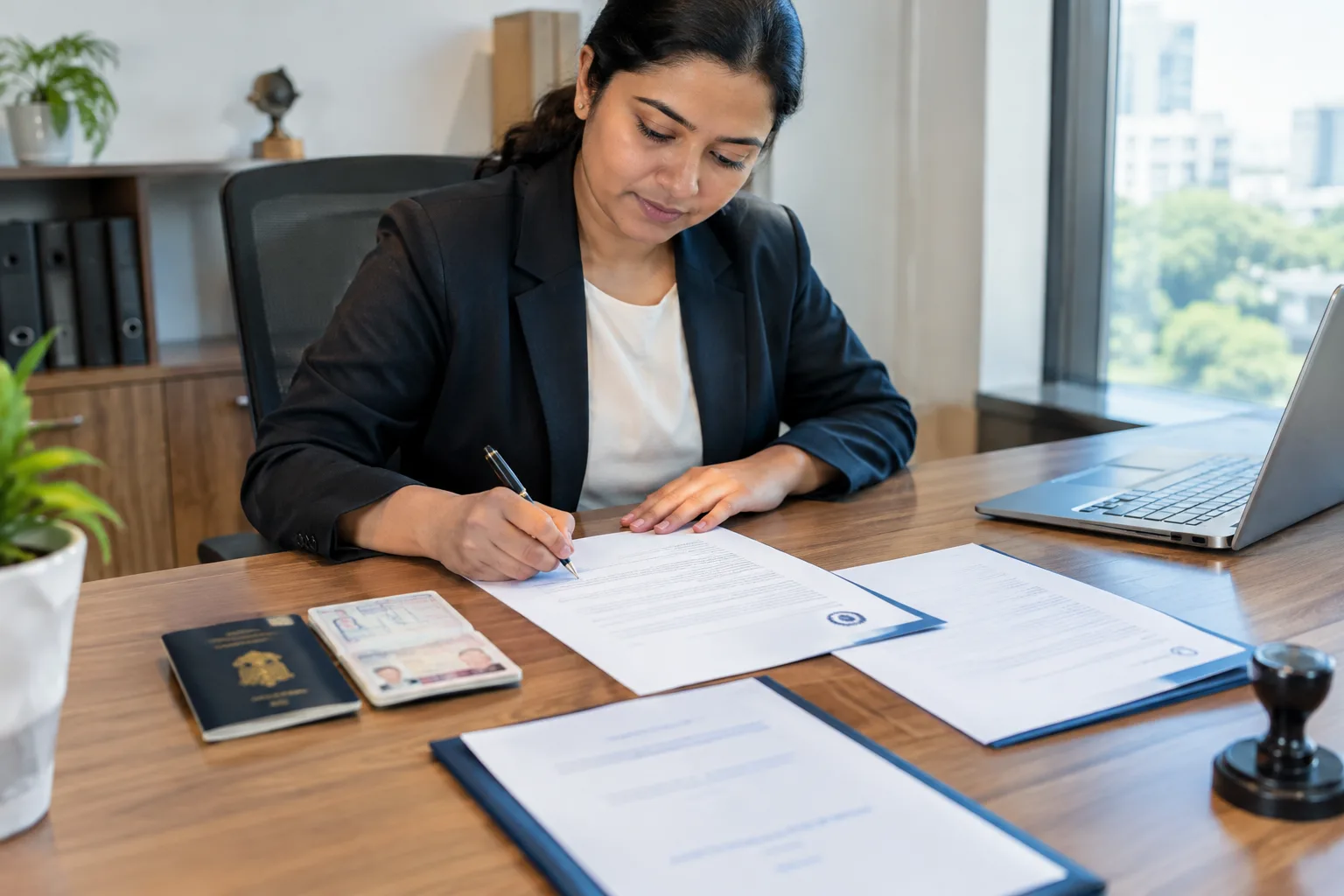
The cover letter is the employer's formal voice in the application. It should be addressed to the visa section of the correct embassy or consulate and include:
- The employee's full name, designation, passport number and length of service
- The purpose of travel, consistent with the invitation letter
- Travel dates and the destination company being visited
- Confirmation that the employee will return to India to resume duties after the trip
- A clear statement of which expenses the company will bear
- The signatory's name, designation and direct contact details, plus the company seal where you normally use one
The line about returning to India matters. It shows the officer that the employee has a continuing role at home, which is central to most business visa decisions. The letter should also describe activities that genuinely fit a business visa: meetings, negotiations, site visits, training and conferences. If the employee will actually be doing hands-on, paid work for the foreign entity, a business visa may be the wrong route altogether. Our guide on business visa vs. work permit explains where that line usually falls.
Sponsorship proof: showing who pays
Sponsorship proof answers a simple question for the consulate: how will this trip be funded? When the Indian employer pays, the cover letter states this, and some consulates also ask for recent company bank statements or a formal financial undertaking. When the host pays some or all costs, the invitation letter should say so in specific terms (for example, accommodation only, or accommodation plus local transport). When costs are split, both letters must describe the same split.
Insurance is part of this picture for many destinations. The Schengen Visa Code requires travel medical insurance with minimum cover of EUR 30,000, valid across the Schengen area for the full stay. VBS arranges travel insurance alongside visas, flights and hotels, so the policy dates match the itinerary on file.
Country-specific extras to plan for
- United States (B-1): applicants complete the DS-160 online form, book an appointment and, in most cases, attend an in-person interview. The employee should be ready to explain the purpose of the trip in their own words, consistent with the letters.
- United Kingdom (Standard Visitor): the UK Immigration Rules set out permitted activities for business visitors, such as attending meetings and conferences and negotiating contracts. Letters should describe activities that sit within that list.
- Schengen countries: beyond the passport and insurance rules above, the application goes to the consulate of the country where the main purpose of the trip lies.
- Attested documents: some countries, particularly for longer assignments, require Indian documents to be attested or apostilled before they are accepted. Our document legalization service handles this step so it does not hold up the visa file.
Common mistakes that slow down visa processing for employees
- Mismatched dates between the invitation letter, cover letter, flight reservation and hotel booking.
- Generic cover letters that do not name the host company or the specific purpose of the visit.
- Unclear sponsorship, where neither letter states plainly who is paying.
- Applying too late, especially before peak travel seasons when appointment slots fill quickly.
- Describing work activities on a business visa application that belong under a work permit.
- Unsigned letters or missing signatory contacts, which leave the consulate with nothing to verify.
Each of these is avoidable with a careful review before submission, which is where structured corporate visa assistance pays for itself.
How VBS handles business visa support for companies

At VBS, visa processing for employees sits inside our wider corporate travel management service, so the visa file, flights, hotel stays and insurance are coordinated by the same team. Each company works with a dedicated corporate travel specialist who prepares the country-specific checklist, reviews draft invitation and cover letters before they are signed, and checks that every date and name lines up across the file.
Clients regularly mention the named team members who keep them updated on application status, and one testimonial describes two Australian visas approved in under a week. Processing times always depend on the destination, the season and the consulate, so we plan submissions with realistic buffers rather than promising a fixed turnaround. You can see the full scope of our visa assistance services in Pune, and read how a structured process saves businesses time on visa applications.
Whether you are a startup sending one engineer to a client meeting or an enterprise moving a delegation to an overseas conference, a well-prepared set of business visa documents for employees is the foundation of a seamless trip. If your team has travel coming up, speak to our visa and corporate travel team and we will build a tailored checklist for each traveller.
Frequently asked questions
How long does business visa processing take for Indian employees?
It depends on the destination country, the season and the consulate's workload, and it can range from a few working days to several weeks. Applying early and submitting a complete, consistent file is the most reliable way to avoid delays. One VBS client saw two Australian visas approved in under a week, but timelines always vary.
Who should sign the company cover letter for a business visa?
An authorised person such as an HR head, director or reporting manager with signing authority should sign it on company letterhead. The letter should include their name, designation and direct contact details so the consulate can verify it. Use the company seal if your organisation normally does.
Is an invitation letter required for every business visa?
Most countries expect proof of the business purpose, and an invitation letter from the host company is the most common form. For conferences, an official registration confirmation from the organiser may serve the same role. Always check the specific consulate's current checklist.
Do Indian company documents need attestation or apostille for a business visa?
For many short business trips they do not, but some countries require attested or apostilled documents, especially for longer assignments. VBS can handle document legalization alongside the visa application so it does not delay the file.
Can VBS manage visa applications for several employees travelling together?
Yes. Our corporate visa assistance covers individual travellers and group delegations, with a dedicated specialist coordinating each person's documents, flights, hotels and insurance. We keep dates and details consistent across the whole group so applications support one another.
